An exclusive revelation by Get2Share.eu
For three years, humanity has believed that Mars was the next great step. The headlines said so. The budgets said so. The televised rocket launches, the simulation habitats in deserts, the endless red-dust renderings — all pointed toward the Red Planet.
They were meant to.
What almost no one knew — what no government admitted, what no space agency published — is that while the world watched Mars, a different mission was already in flight.
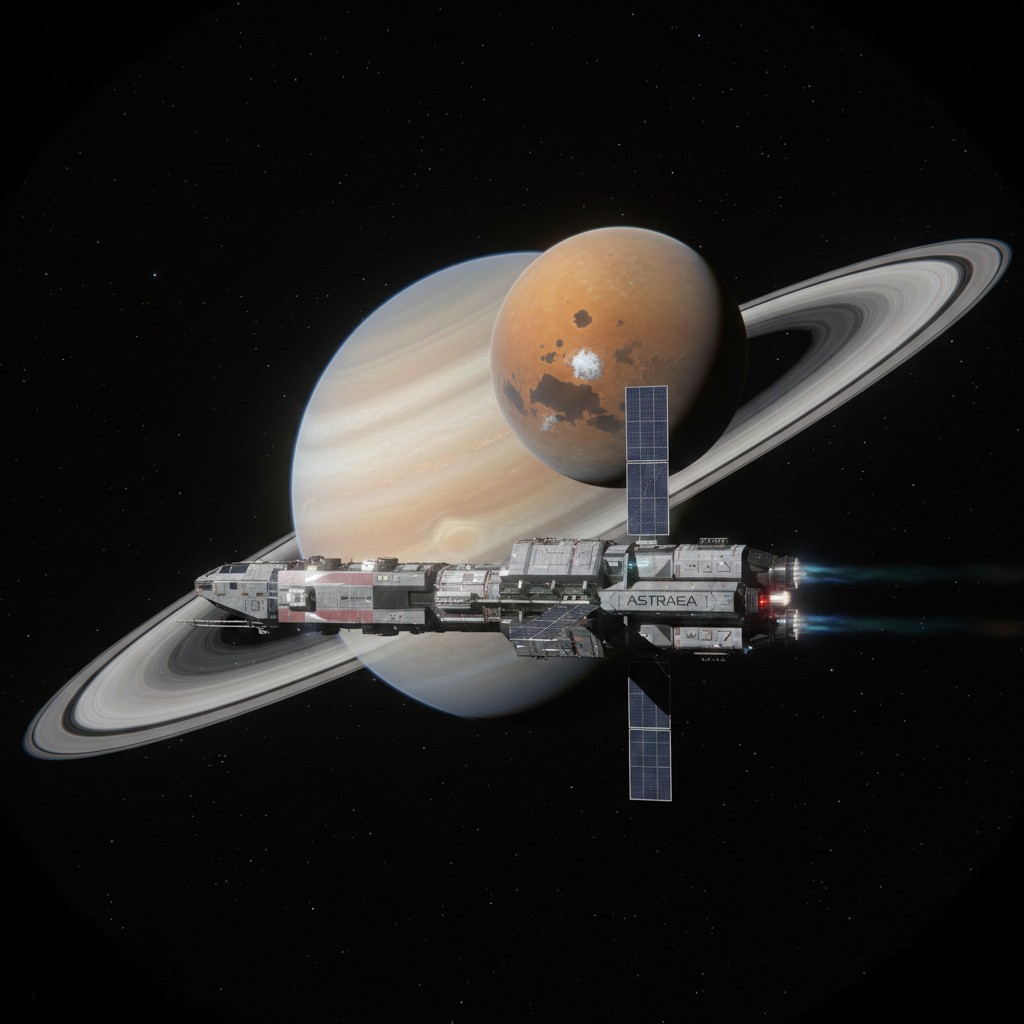
Three years ago, under layers of international classification and private aerospace contracts buried inside environmental satellite programs, a deep-space vessel quietly departed Earth orbit. Its destination was not Mars.
It was Titan.
Today, Get2Share.eu can exclusively reveal what has remained hidden: a four-person crew is currently en route to Saturn’s largest moon in what may become the first human colonization attempt beyond the inner solar system.
Why Titan — Not Mars?
On paper, Mars is easier. Closer. Faster to reach. Easier to communicate with. So why risk a decade-long deep space journey to a frozen world nearly ten astronomical units from the Sun?
According to sources close to the mission’s scientific advisory team, the decision came down to three decisive factors:
1. Radiation Protection
Unlike Mars, Titan possesses a dense nitrogen-rich atmosphere — thicker even than Earth’s. Combined with Saturn’s magnetic influence, Titan offers significantly greater protection from cosmic radiation than the exposed Martian surface.
In deep space planning documents leaked to Get2Share.eu, Titan was described as:
“The only solid body in the outer solar system where humans could stand on the surface without immediate radiation lethality.”
For a permanent settlement, radiation isn’t a secondary concern. It’s the primary obstacle. Titan solves part of that equation naturally.
2. Abundant Resources
Titan is rich in hydrocarbons — methane, ethane — entire lakes and seas of them. To early 21st-century scientists, these were curiosities.
To long-term planners, they are fuel.
Fuel for power generation. Fuel for return missions. Raw material for plastics, polymers, and chemical synthesis. Add to that water ice — abundant beneath the surface — and Titan becomes a chemical factory waiting to be activated.
One internal memo summarized it bluntly:
“Mars offers survival. Titan offers industry.”
3. Strategic Distance
Perhaps the most controversial reason: Titan is far enough away to ensure autonomy.
Mars colonization has always implied political oversight, competing flags, corporate stakes. Titan, by contrast, is so distant and so logistically demanding that any settlement would operate independently by necessity.
A new beginning — beyond the reach of Earth’s immediate control.
Why the Secrecy?
If this mission is humanity’s boldest leap, why hide it?
Three converging reasons:
Geopolitical Stability
Announcing a multinational Titan colonization effort would have triggered a new space race overnight. Competing powers would accelerate weapons-capable deep space technologies under the banner of “exploration.”
Keeping it quiet prevented escalation.
Technological Uncertainty
The propulsion system — believed to be a next-generation nuclear thermal hybrid drive — has never been publicly acknowledged. A failure, or loss of crew, would have sparked global outrage and halted deep space exploration for decades.
The mission needed silence to survive.
Psychological Containment
Four humans voluntarily committing to a journey that may span eight to ten years before return — possibly longer — raises ethical questions governments were not prepared to debate publicly.
So the launch was disguised as a long-duration propulsion experiment. The deep-space trajectory was masked within routine outer-planet probe traffic.
And then it vanished from headlines.
The Crew
Get2Share.eu has confirmed the identities of the four astronauts aboard the vessel Astraea:
- Commander Elias Vance (42) – Aerospace engineer and former test pilot. Mission lead.
- Dr. Sofia Markovic (39) – Planetary geochemist specializing in cryogenic environments.
- Dr. Adrian Cole (44) – Systems architect and nuclear propulsion specialist.
- Dr. Lena Ishikawa (37) – Astrobiologist and closed-ecosystem life support expert.
Two engineers. Two scientists. All cross-trained for survival operations.
Each signed a classified lifetime non-disclosure agreement. Each underwent psychological isolation trials exceeding any previous NASA or ESA standards. Each knew that communication delays would stretch beyond 70 minutes round-trip once they approached Saturn.
They left behind families who were told only that the mission was “extended.”
Where Are They Now?
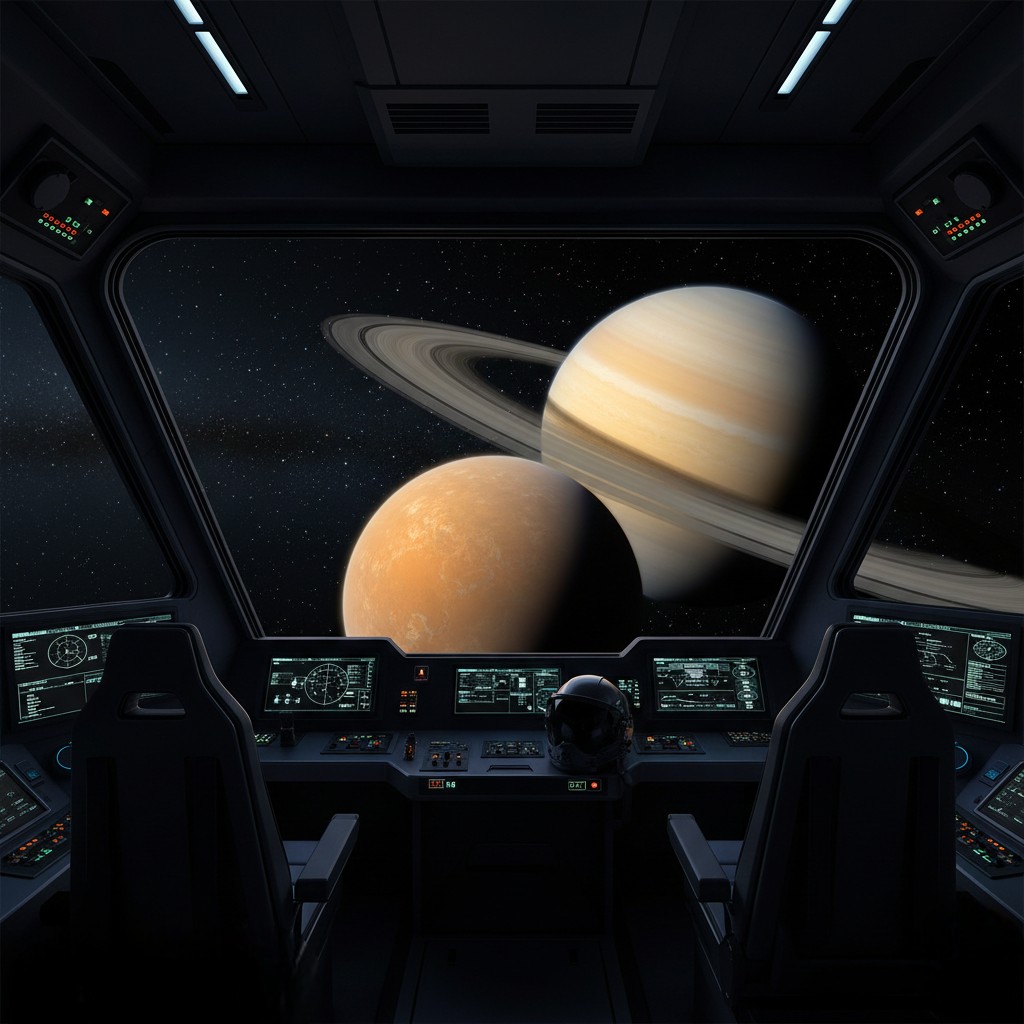
By our calculations, the Astraea has already completed its Jupiter gravity assist and is entering the long cruise phase toward Saturn orbit insertion.
If all proceeds according to plan, Titan arrival will occur in approximately three to four years.
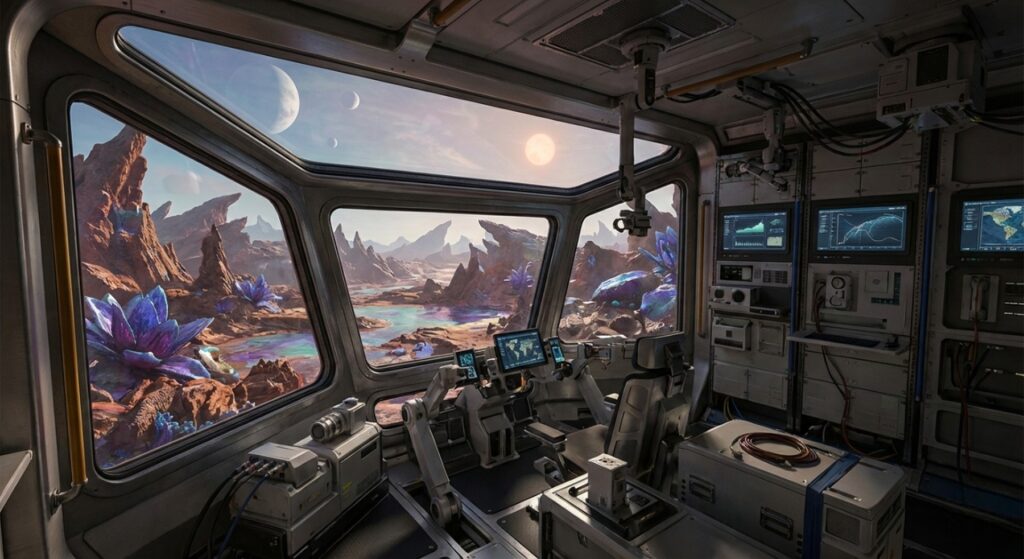
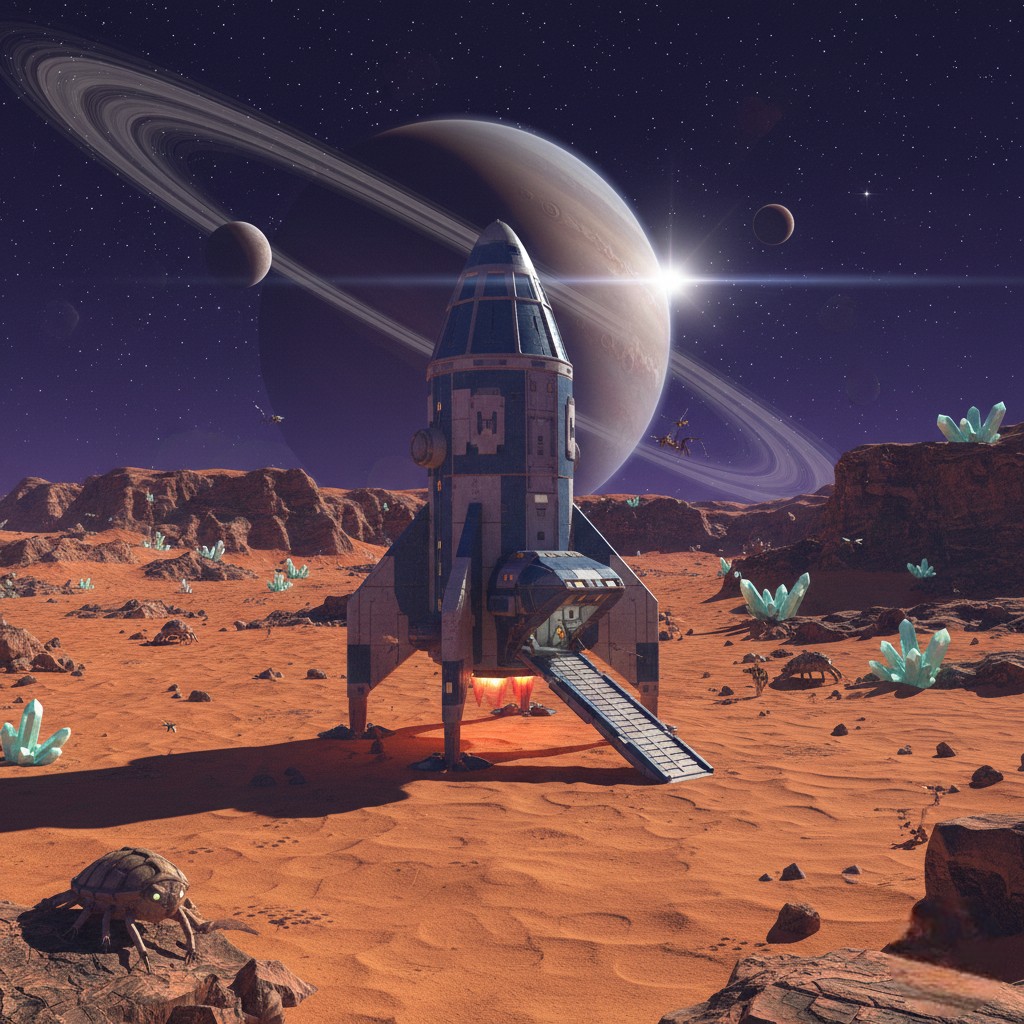
And when they descend through Titan’s orange haze, humanity may quietly become a multi-planet — or rather, multi-moon — species.
Without applause.
Without live broadcasts.
Without knowing.
Until now.
This is only the beginning of what Get2Share.eu will reveal.
Because someone onboard wants the world to know.