Part III – The Reckoning of Two Worlds
The canyon still burned three days after the alien ambush.
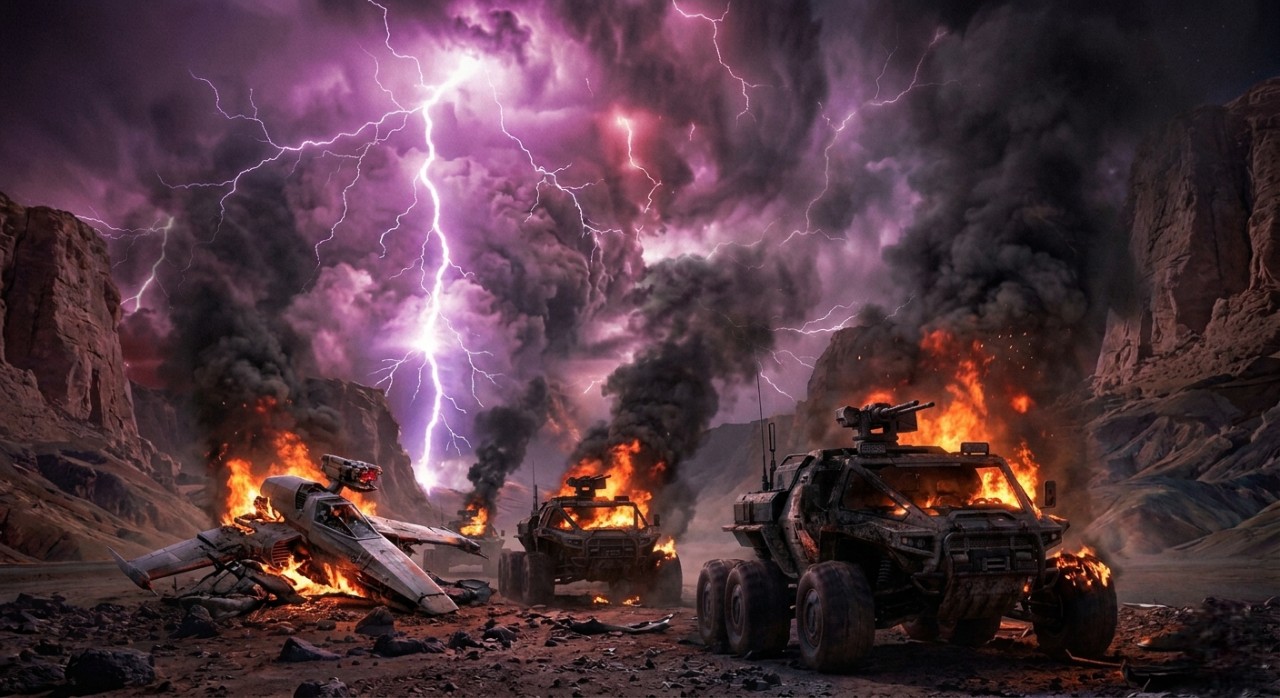
Orbital drones captured the aftermath in haunting detail: scorched earth, shattered rock formations, and the skeletal remains of Terran reconnaissance rovers scattered across the obsidian floor of Kepler‑442c. Smoke rose in dark spirals into a sky that had finally fallen silent.
The storm was gone.
The war was not.
The Aftermath of the Battle of Kepler‑442c
The alien starfighter wreckage lay twisted among the debris — proof that the Terran patrol had not fallen without resistance. Yet the cost was undeniable.
Outpost Eryx was confirmed destroyed.
Twelve personnel missing.
Three confirmed survivors recovered by emergency extraction teams.
Captain Elara Vance was among them.
From orbit, the scale of the situation became terrifyingly clear. Long-range scans revealed structured formations beyond the planet’s far hemisphere — organized, deliberate, and vast.
An alien fleet.
Not explorers.
Not raiders.
A defensive armada positioned with calculated precision.
Humanity had not discovered an empty frontier world.
It had crossed into defended territory.
Earth’s Response to First Contact War
Back on Earth, emergency councils convened within hours of receiving the transmission. The footage from the canyon spread across military command networks: red alien energy beams cutting through lightning-filled skies, Terran rail cannons firing in defiance, vehicles engulfed in flame.
The phrase echoed across every strategic chamber:
“This was not an accident.”
What began as an exoplanet research mission had escalated into the first confirmed interstellar war between humans and an extraterrestrial civilization.
Fleet mobilization orders were signed.
Deep-space carriers were redirected.
Defense platforms along the outer colonies were placed on maximum alert.
Human expansion had reached its first true resistance.
The Cost of War on Alien Soil
Captain Vance stood before a panoramic viewport aboard the carrier TSV Horizon, watching Kepler‑442c rotate slowly below.
Beautiful.
Deadly.
Contested.
“We thought we were alone out there,” one officer said quietly behind her.
Vance shook her head.
“No,” she replied. “We just weren’t the first.”
The alien civilization had made its message unmistakable. The canyon ambush was not annihilation — it was demonstration. A measured strike against a perceived incursion.
But humanity had its own message to send.
And unlike the patrol rovers trapped in the canyon, the Terran fleet would not enter blind.
The Reckoning of Two Worlds
As both species prepared for escalation, historians would later mark the Battle of Kepler‑442c as the turning point — the moment humanity’s golden age of exploration transformed into an age of militarized expansion.
Diplomacy remained uncertain.
Intentions remained unclear.
But one fact bound two civilizations together in tension:
Both believed they were defending their home.
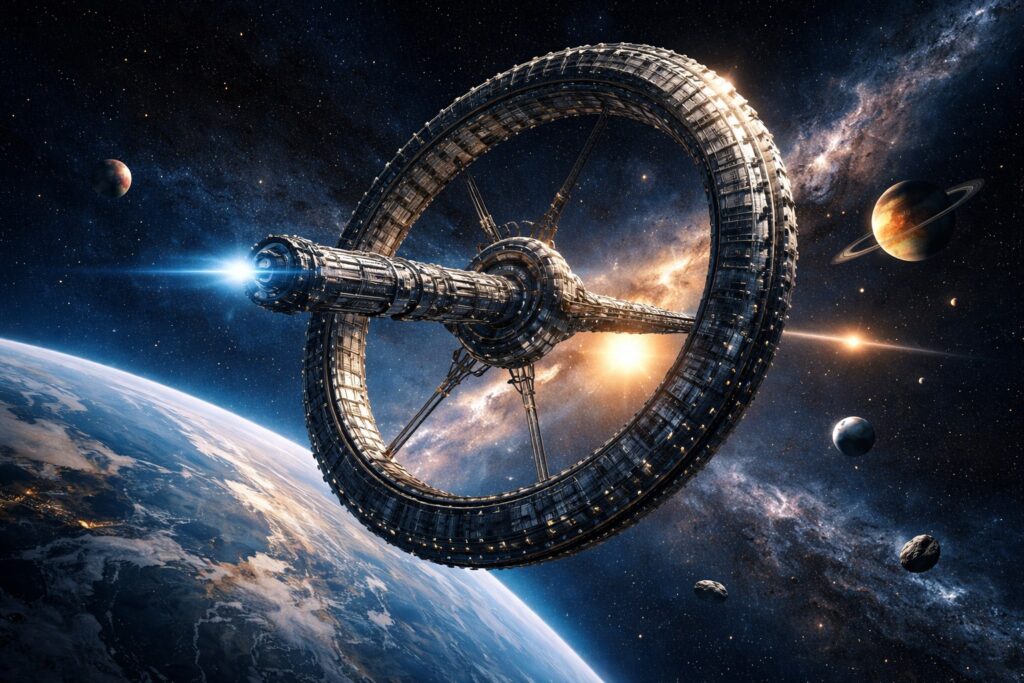
In the silent vacuum above the alien world, human warships formed defensive lines as the distant alien fleet adjusted its own formation in response.
No shots fired.
Not yet.
But the space between them was no longer empty.
It was charged with consequence.
The first patrol had fallen in fire beneath a violet storm.
The next chapter of this interstellar war would be written among the stars.