
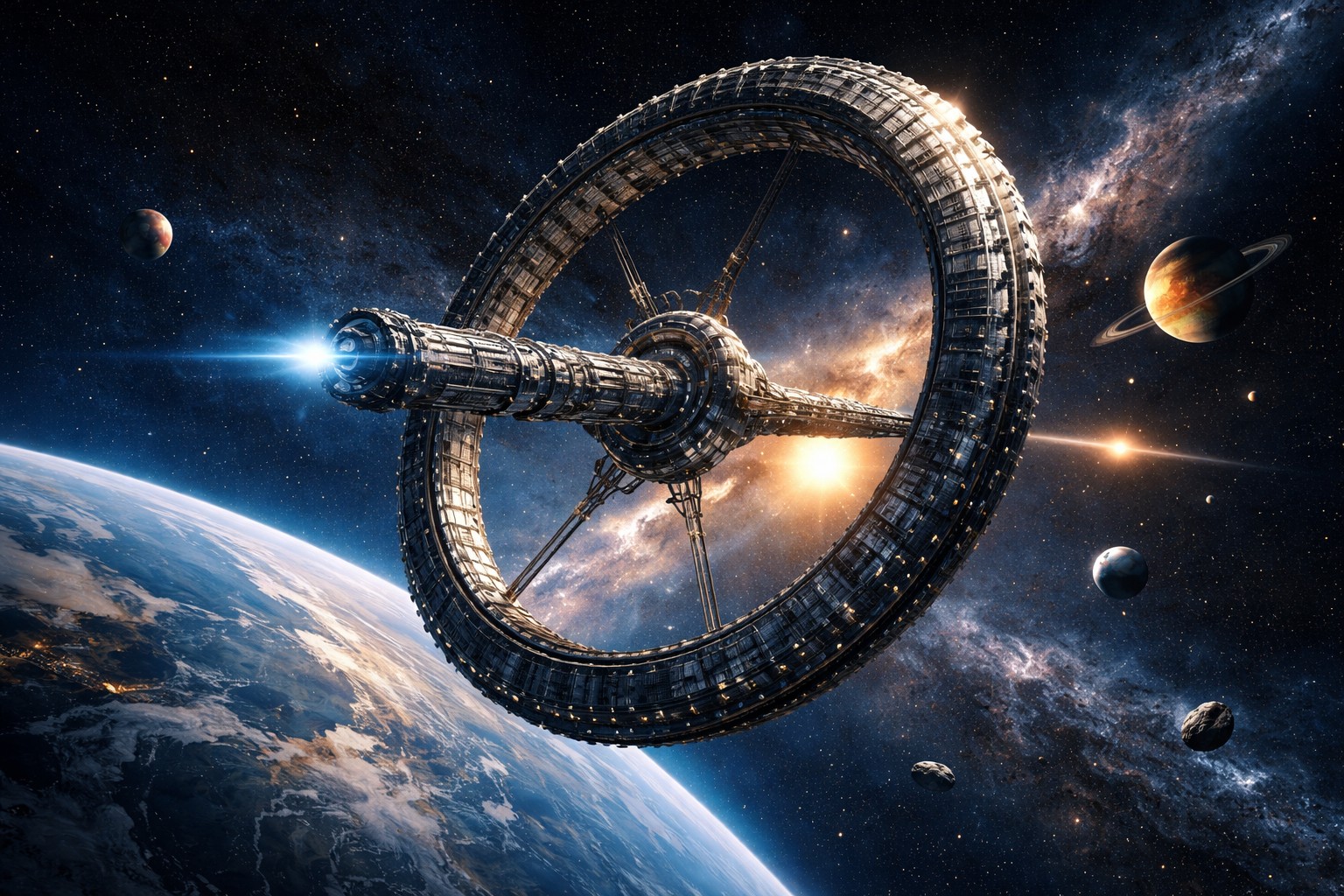
Suspended in the velvet darkness of space, the ring station turns in perfect silence, a monumental wheel of steel and light orbiting above the blue curve of a living world. Its immense structure encircles a central spine that glows with steady propulsion energy, a beacon for travelers crossing the deep interstellar lanes. From a distance, it appears almost celestial, as if it were a natural formation shaped by gravity and time rather than deliberate design.
The station was built to endure. Along the inner rim, artificial gravity allows entire ecosystems to thrive—gardens, habitats, and research sectors rotating endlessly to mimic the comfort of a home long left behind. Thousands live and work here, each one a small but essential component in a machine designed to bridge worlds. Docking bays open and close like mechanical petals, welcoming ships from distant systems carrying stories, cargo, and secrets.
Beyond the station, planets drift in quiet procession, some ringed, some scarred by ancient impacts, all bound together by the invisible laws that govern the cosmos. The glow of nearby stars paints the metal hull in gold and blue, highlighting the scars of micrometeors and the careful repairs of generations of engineers.
This is not just a station—it is a crossroads of civilization. From here, humanity does not merely observe the universe; it participates in it. The Great Ring Station stands as proof that even in the vast emptiness of space, purpose, life, and ambition can form something truly eternal.


